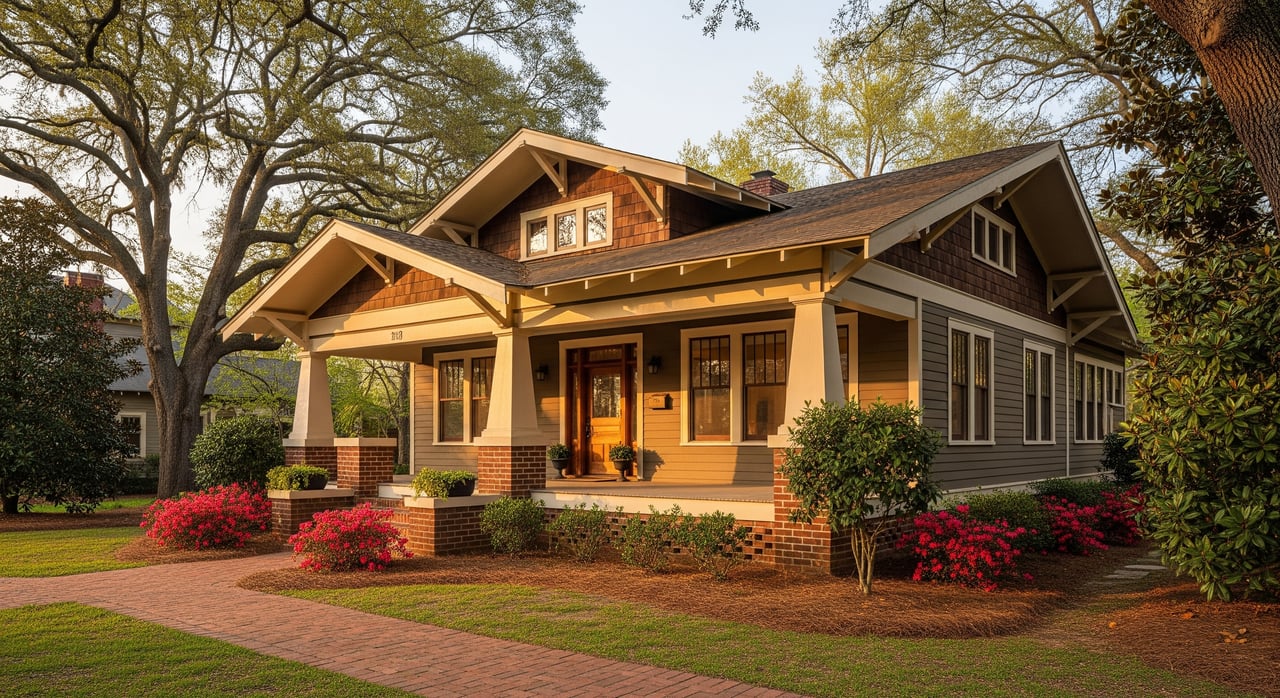
Is there anything more welcoming than a deep front porch and the rhythm of wide eaves on a tree‑lined street? If you are drawn to Durham’s in‑town neighborhoods, chances are you have admired a Craftsman bungalow or an American Foursquare on your walks. You want a home with character that lives well today, and you want to make smart, value‑preserving choices. This quick guide gives you clear ways to identify these homes, understand their layouts and materials, and plan updates that respect their charm and protect resale. Let’s dive in.
What makes a Durham bungalow special
Durham’s Craftsman bungalows and American Foursquares were built largely between the 1900s and the 1930s, during the rise of streetcar and early‑auto suburbs. You find them on modest lots with front porches, close to sidewalks and shade trees. Many served worker and middle‑class households connected to nearby industries and the university.
You will see these house types concentrated in established in‑town neighborhoods, often within or near historic districts. Examples include Trinity Park, Old West Durham, Morehead Hill, Watts‑Hillandale, Duke Park, Cleveland‑Holloway, and Walltown.
Craftsman bungalow: quick identification
- Scale: Usually 1 to 1.5 stories with a compact footprint, typically about 800–1,400 square feet.
- Roof and eaves: Low‑pitched gable or cross‑gable, wide overhangs, and exposed rafter tails or knee‑brace brackets.
- Porch: Full or partial front porch, often with tapered square columns on hefty brick or stone piers.
- Windows and doors: Double‑hung windows, sometimes grouped; dormers on 1.5‑story examples.
- Interior character: Built‑in bookcases and cabinetry, a fireplace, original wood trim, and a simple, open flow between living and dining.
American Foursquare: quick identification
- Scale: Boxy two‑story form on a near‑square plan, typically about 1,500–2,400 square feet.
- Roof and dormer: Low to moderate hipped roof with a large central dormer and broad eaves.
- Porch: Full‑width front porch, often blending Craftsman or Classical details.
- Plan logic: Often described as four rooms up, four rooms down, with a central or side hall and high first‑floor ceilings.
- Style mix: Many Foursquares combine Craftsman, Colonial Revival, or Prairie details, which is common in Durham.
Visual cues checklist for house‑spotting walks
- Low, wide eaves with exposed rafter tails → Craftsman bungalow
- Tapered porch columns on brick or stone piers → Craftsman bungalow
- Boxy two stories with hipped roof and central dormer → American Foursquare
- Built‑ins, fireplace focus, and original trim → intact historic interior features
Where you will find them in Durham
In‑town neighborhoods with early 20th‑century homes offer a high concentration of these types. Look in Trinity Park, Old West Durham, Morehead Hill, Watts‑Hillandale, Duke Park, Cleveland‑Holloway, Walltown, and blocks near downtown. Street patterns often include modest setbacks, continuous sidewalks, and mature canopy trees, which enhance the porch‑to‑street connection these homes do so well.
Floor plans and daily living
Bungalows typically deliver main‑level living with two or three bedrooms, a compact kitchen, and a separate dining room or alcove. Porches act like outdoor living rooms and attics may be finished for a small bedroom or storage. If single‑level living and a strong connection to the front yard appeal to you, a bungalow fits nicely.
Foursquares spread out over two full stories, which creates natural separation between public and private spaces. You often get three bedrooms upstairs and flexible rooms on the first floor that adapt well to a home office, a playroom, or a second sitting area. Larger footprints make adding a bath or mudroom more straightforward.
Common friction points in both types include small kitchens, limited baths, and narrow closets. Solutions range from rear additions to selective wall removals or attic conversions. Plan carefully so you preserve character‑defining features like the porch, roofline, built‑ins, and original trim.
Durham materials and construction details
Expect wood clapboard siding with shingle accents in gables, and brick used for porch piers or entire facades in some cases. Early concrete block foundations and prominent masonry chimneys are common. Decorative elements like exposed rafter tails, battered porch piers, and original porch flooring add a lot to curb character.
Older systems vary. You may encounter knob‑and‑tube or early cloth wiring in rarely updated houses, galvanized plumbing, single‑pane wood windows, and limited insulation. Plan upgrades with care so you improve comfort without stripping away what makes the home special.
Renovation and preservation, made practical
Good projects respect the exterior form and features, and make interior upgrades that are reversible or minimally invasive. Focus on comfort and safety while protecting visible character.
Permits and local review
If the home sits in a local historic district or is a designated landmark, exterior changes typically require review by the City of Durham’s historic preservation staff or commission. Even outside districts, some areas have neighborhood conservation overlays or covenants. Confirm requirements before you plan exterior work.
Energy and comfort upgrades
- Insulate attics and crawlspaces thoughtfully to avoid trapping moisture in historic assemblies. Vapor‑permeable approaches are often best.
- Repair and weatherstrip original wood windows when possible, and use storm windows for energy gains. Full replacement should be a last resort to preserve character and value.
- Consider high‑efficiency mini‑splits where duct runs would disrupt historic fabric, and site exterior equipment discreetly.
Structural and moisture priorities
- Inspect porch framing, sills, columns, and flashing. Porches define the look and often need attention.
- Improve grading and drainage so water moves away from the foundation.
- Maintain roof coverings, check penetrations, and keep flashing tight around chimneys and valleys.
Health and safety
- Assume pre‑1978 paint may contain lead and follow lead‑safe work practices.
- Test for asbestos in old flooring mastics, pipe wrap, or cement boards before disturbance.
- Upgrade electrical capacity and outdated plumbing for safety and modern loads.
Incentives and credits
Federal historic tax incentives apply to certified rehabilitations of income‑producing historic buildings. Owner‑occupied incentives vary by state and locality. Confirm current programs with the N.C. State Historic Preservation Office and City of Durham staff before you budget.
Buyer inspection checklist
Use this short list to focus your due diligence before you fall in love with the porch swing.
- Exterior and structure: Porch condition, roof age and flashing, foundation cracks, moisture signs in crawlspace or basement, grading and gutters.
- Envelope and energy: Window sash and sill condition, attic insulation levels, evidence of historic paint layers that may indicate lead.
- Systems: Service capacity, presence of knob‑and‑tube or ungrounded circuits, plumbing material and age, HVAC type and distribution.
- Health and safety: Signs of mold or pests, any undocumented additions or unpermitted work.
- Documentation: Original construction date, past permits and plans. Schedule structural, pest, electrical, and hazardous materials inspections as needed.
Protecting value over time
- Keep the front porch and street‑facing roofline intact. These are the biggest drivers of curb appeal.
- Repair original woodwork, floors, built‑ins, and windows when you can. High‑quality restoration is often rewarded at resale.
- Place additions at the rear or in the attic so the primary facade remains unaltered.
- When replacing visible elements, use durable, sympathetic materials that match original profiles and proportions.
- Document your work and keep records of materials and contractors for future review and resale.
Ready to tour Durham’s bungalows?
If you are drawn to warm woodwork, gracious porches, and blocks with history, you are in the right city. With clear eyes about layouts, systems, and preservation priorities, you can find a home that feels timeless and lives comfortably today. If you would like guidance on neighborhoods, timing, and value‑smart upgrades, reach out to Tim Hock for a calm, design‑savvy approach to buying or selling in Durham.
FAQs
What is a Craftsman bungalow in Durham?
- A 1 to 1.5‑story home, typically 800–1,400 square feet, with low‑pitched gables, wide eaves with exposed rafter tails, and a porch with tapered columns on substantial piers.
How do I tell a Foursquare from a bungalow?
- A Foursquare is a boxy two‑story house with a hipped roof and central dormer, often described as four rooms up and four down, while a bungalow is lower, wider, and typically one main level.
Which Durham neighborhoods have many bungalows and Foursquares?
- You will commonly find them in Trinity Park, Old West Durham, Morehead Hill, Watts‑Hillandale, Duke Park, Cleveland‑Holloway, Walltown, and blocks near downtown.
What updates make sense without hurting character?
- Focus on reversible interior improvements, discreet HVAC upgrades, attic and crawlspace insulation, window repair with storms, and careful porch and roof maintenance.
Do I need approval for exterior changes in a historic district?
- Yes, most exterior changes in designated local historic districts or on landmarked properties require review and approval by the City of Durham’s historic preservation staff or commission.
Are there tax incentives for renovating a historic home?
- Federal incentives apply to income‑producing historic properties, and owner‑occupied incentives vary, so confirm current programs with the N.C. State Historic Preservation Office and City of Durham.
