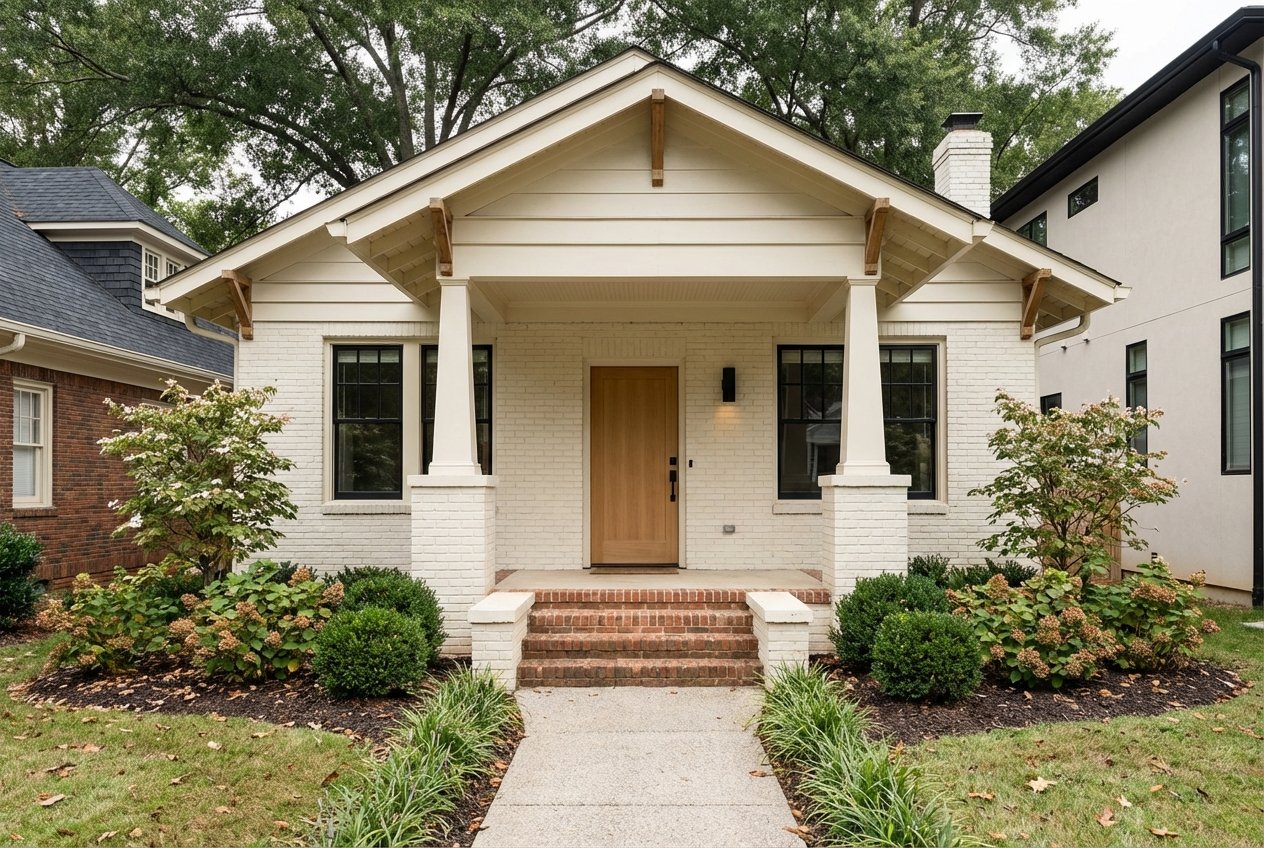
If you have ever strolled past a deep front porch in Durham and wondered what story that roofline tells, you are not alone. Understanding a home’s style helps you see how it likely lives inside, how to approach renovations, and where to look next. In this guide, you will learn the defining features of the major in-town Durham styles, how to spot them, and what to consider if you plan to buy or update one. Let’s dive in.
Durham’s house styles at a glance
Durham’s in-town neighborhoods reflect a clear timeline of growth: early industrial mill housing, a surge of early 20th-century bungalows and foursquares, postwar ranch and split-level homes, and today’s thoughtful infill and adaptive reuse of former industrial buildings. Local historic districts use a Certificate of Appropriateness process to guide exterior changes, so it pays to know where design review applies. You can review the City’s policies and district maps on the Historic Preservation page from the City of Durham’s website.
- Learn how local review works in designated districts by visiting the City’s page on Historic Preservation and Certificates of Appropriateness.
- For new construction and additions, the Durham Design Manual outlines compatibility standards that shape massing, materials, and setbacks.
Craftsman bungalows
How to spot it
You will see low-pitched gabled roofs, wide eaves with exposed rafter tails or knee braces, and a broad front porch on piers or tapered square columns. Mixed cladding, a visible chimney, and simple, honest trim are typical. These details are classic Craftsman cues you can confirm in this widely used style guide from The Spruce.
How it lives
Most bungalows are one to one-and-a-half stories, with living and dining spaces up front and bedrooms on the main level. Interior built-ins, boxed window seats, and a fireplace as the focal point are common. Floor plans favor a cozy, connected main level that orients daily life toward the porch and living room.
Where to find it
Durham saw a large wave of Craftsman building in the 1910s and 1920s. You will find strong concentrations in Morehead Hill, Trinity Park, Lakewood Park, and parts of the Golden Belt area. The Morehead Hill preservation plan is a helpful reference when you want block-level examples and context.
American Foursquare
How to spot it
Think boxy, efficient, and upright. A Foursquare typically has a near-square footprint, a hipped roof with a central dormer, and a generous one-story front porch. Many carry simple Craftsman or Prairie details. This quick profile from an architectural survey highlights the type’s telltale massing and layout (American Foursquare overview).
How it lives
Two full stories with four primary rooms on each floor is the hallmark. Expect a center hall or straightforward circulation, with living, dining, and kitchen spaces on the main level and bedrooms above. These plans deliver predictable room sizes and an efficient use of space that works well for daily routines.
Where to find it
You will see many Foursquares in early 20th-century neighborhoods like Morehead Hill and Burch Avenue. For neighborhood context, the Burch Avenue Historic District overview gives a concise snapshot of its period housing stock.
Mill houses and mill-village cottages
How to spot it
Mill housing is modest, practical, and compact. Look for small one to one-and-a-half story dwellings with simple L- or T-shaped footprints, wood siding, and a basic porch or stoop. Ornament is minimal, and lots tend to be compact. Durham’s mill-village forms are documented in the City’s Golden Belt preservation plan.
How it lives
Plans are shallow and efficient, with smaller bedrooms, kitchens toward the rear, and straightforward circulation. Many have been updated over time, often with kitchen expansions or mechanical upgrades. Expect modest square footage and a walkable, close-knit lot pattern.
Where to find it
Look in the Golden Belt mill village, Morning Glory Avenue, and parts of East Durham and Old West Durham near the former Erwin Mills. These areas offer a direct link to Durham’s industrial roots and a range of restorations and sensitive updates.
Mid-century ranch and split-level
How to spot it
Postwar homes in Durham typically read as low, long, and open. You will see single-story ranches or split-levels with low-pitched roofs, wide eaves, picture windows, and attached carports or garages. An industry context guide summarizes the era’s forms and interior shifts toward more open plans (midcentury housing overview).
How it lives
Many mid-century homes prioritize single-level living or short stairs between clustered zones. Expect a semi-open living, dining, and kitchen arrangement with bedrooms grouped in a wing. Large windows and sliders connect daily life to patios and backyards.
Where to find it
You will encounter mid-century infill in Old North Durham, Walltown, Stokesdale, and other postwar pockets within older neighborhoods. A number of local architects have also created contemporary homes that reference mid-century proportions on small lots.
Contemporary infill and adaptive reuse
What you will notice
Durham’s in-town fabric continues to evolve with new-builds on traditional lots and the reuse of former industrial buildings. Sensitive infill respects neighbors’ heights, setbacks, and rhythms, while bolder contemporary homes lean into larger glazing and crisp, modern materials. The City’s Design Manual describes how new work can be compatible in scale and character.
How it lives
Designers often use taller ceilings, open plans, and strategic window placement to bring light into narrow lots. Roof decks or second-floor living spaces show up where lot depth is tight. In adaptive reuse buildings, loft-style layouts balance historic structure with modern amenities.
Quick spotting checklist
Use this short list to decode listings and curbside clues fast:
- Craftsman bungalow: Broad front porch on tapered piers, low gable, exposed rafter tails, and mentions of built-ins or a fireplace. Reference features from this Craftsman style guide.
- American Foursquare: Boxy two-story mass with a hipped roof and dormer, porch spanning the facade, and a simple, symmetrical look. See core traits in this Foursquare summary.
- Mill house: Small lot, modest L or T footprint, simple porch, minimal ornament. Durham’s mill-village forms are outlined in the Golden Belt plan.
- Ranch or split-level: Low profile, picture windows, attached carport or garage, and a more open main living zone. A concise midcentury overview explains these cues.
- Contemporary infill: Taller massing, larger modern windows, and fresh materials on a traditional lot. Compatibility guidance appears in the Design Manual.
Renovation, review, and incentives
Before planning exterior changes, confirm whether your property sits inside a local historic district. Many exterior projects require a Certificate of Appropriateness from the Historic Preservation Commission. Start with the City’s page on Historic Preservation and COA requirements and the relevant neighborhood preservation plan.
North Carolina offers state historic rehabilitation tax credits for qualified projects, and income-producing properties may also be eligible for federal credits. Because eligibility and applications are technical, consult preservation resources early and coordinate with your accountant.
For older homes, expect some common systems considerations. Roofing and flashing, porch piers, foundations, older wiring or undersized panels, cast-iron or galvanized plumbing, and potential asbestos or lead-based paint are typical checkpoints. A practical primer on due diligence appears in this guide to buying a historic home. Work with inspectors who know older construction so you can budget with confidence.
Where to walk and look
- Golden Belt and Morning Glory: A tight fabric of mill houses with some later bungalows. The Golden Belt preservation plan has helpful maps and descriptions.
- Old West Durham and Ninth Street: Erwin Mill history, modest worker cottages, and layers of later infill. For a quick historical entry point, review Erwin Mill’s context and regional preservation sources.
- Morehead Hill and Trinity Park: Deep collections of Craftsman bungalows and Foursquares with period revivals mixed in. The Morehead Hill preservation plan provides architectural overviews and character-defining features.
- Walltown and Old North Durham: Earlier cottages alongside mid-century homes and contemporary infill. Local architects have explored modern, context-aware design here, as shown in this reflection on preserving modernism and neighborhood character.
When you understand style, you can anticipate a home’s likely floor plan, light patterns, and renovation pathways. You also become a sharper buyer or seller, because you can speak to what makes your block special and how thoughtful updates fit the neighborhood.
If you are ready to explore Durham’s architectural landscape or position your in-town home for the right buyer, connect with Tim Hock. You will get design-aware guidance, neighborhood-smart strategy, and a calm, concierge experience from a hands-on local broker.
FAQs
What are the most common home styles in in-town Durham?
- You will most often see Craftsman bungalows, American Foursquares, mill-village cottages, postwar ranch and split-level homes, and a growing number of contemporary infill houses near downtown.
How can I tell a Craftsman from a Foursquare on a walk?
- A Craftsman reads low and wide with a deep front porch and exposed rafter tails. A Foursquare is a boxy two-story with a hipped roof, a centered dormer, and a porch spanning the facade.
What should I know before renovating in a local historic district?
- Exterior changes often require a Certificate of Appropriateness from the Historic Preservation Commission. Confirm your address on the City’s historic resources map and review the district plan before you design.
Where can I see mill houses in Durham?
- Walk the Golden Belt mill village and nearby Morning Glory Avenue blocks. You will find compact cottages with simple footprints and modest porches that reflect Durham’s industrial past.
Are there incentives for restoring a historic Durham home?
- North Carolina offers state historic rehabilitation tax credits, and income-producing properties may qualify for federal credits. Consult preservation staff and qualified tax professionals early in your planning.
