What does an average Tuesday look like when you live close to Downtown Durham? Picture a short walk for coffee, a quick stop at the farmers’ market later in the week, and an evening show within minutes of your front porch. If you love historic character, adaptive reuse spaces, and a routine that feels connected, in‑town Durham delivers. In this guide, you’ll see how daily life flows, the kinds of homes you’ll find, and what to consider as you narrow your search. Let’s dive in.
What in‑town means
In‑town Durham typically refers to neighborhoods within or just beyond the historic street grid around Downtown Durham. You’re near cultural anchors, established commercial corridors, and major employers like Duke University and Duke Health, North Carolina Central University, and regional connectivity to Research Triangle Park. These areas include the downtown core and nearby districts such as Brightleaf, American Tobacco, Trinity Park, Old West Durham, Morehead Hill, Walltown, Hayti, and the Ninth Street corridor.
The lifestyle is urban and neighborhood‑centric. You trade large yards for sidewalks, short blocks, and a mix of historic homes and newer infill. Many daily errands can shift to walking or biking, though most residents still keep a car for regional commutes and airport trips.
Daily rhythms and walkability
Coffee and short errands
You’ll find the most walkable pockets around the downtown core, the Ninth Street area, and the Brightleaf and American Tobacco districts. It’s common to walk to a morning cafe, a bakery, a small grocery, or a neighborhood bar. Tools like Walk Score and local walk audits help you compare specific blocks, but your best gauge is how your routine feels on the ground at different times of day.
Grocery and markets
In‑town options include small grocers, specialty food shops, and co‑ops, with larger supermarkets a short drive or bike ride away. The seasonal Durham Farmers’ Market is a weekly ritual for many residents who value fresh, local ingredients. Expect frequent food runs to bakeries, delis, and market stalls to be part of your week.
Dining and coffee culture
Durham’s independent restaurant and coffee scene shapes daily life. By day, you have casual cafes and bakeries for quick meetups and laptop time. Evenings bring chef‑driven restaurants and brewpubs, often located in renovated mill or tobacco buildings with exposed brick and industrial beams that appeal to a design‑minded eye.
Parks and greenways
Small urban parks and greenways weave through the in‑town fabric. Durham Central Park supports everyday relaxation and community events. The Downtown Greenway segments and the nearby American Tobacco Trail give you options for dog walks, runs, and bike commutes. For a quick nature reset on weekends, the Eno River and West Point on the Eno offer easy access to trails and water views.
Transit and commuting
GoDurham buses connect you across the city, while GoTriangle offers regional routes. The Amtrak station downtown provides regional rail service for trips to other cities. As of the mid‑2020s, there is no light‑rail network through downtown. Bike infrastructure is a mix of on‑street lanes and greenway segments, and car ownership remains common for commutes to suburban workplaces or the airport.
Arts and culture
Cultural anchors
You can plan an entire month of evenings around performances and screenings. The Durham Performing Arts Center hosts touring shows and concerts. The Full Frame Documentary Film Festival and other film, theater, and music events bring energy to the core. Visual arts show up in galleries, at the Durham Arts Council, and in public murals throughout in‑town corridors.
Weekly and seasonal events
Weekly farmers’ markets, First Friday and similar art and food nights, brewery tap events, and seasonal street fairs keep a steady rhythm. These gatherings make it easy to meet neighbors and learn the character of each block. For newcomers, they’re a low‑pressure way to sample different corners of the city and find your go‑to spots.
Nightlife and evenings
Evenings range from quiet porch time on historic streets to lively bars and music venues closer to Brightleaf, American Tobacco, and downtown. If you value inspiring spaces, you’ll find venues inside adaptive‑reuse buildings with original brickwork and steel that set an architectural mood without trying too hard. You can choose a calm night in or lean into the city’s energy within minutes of home.
Homes and design
Housing types
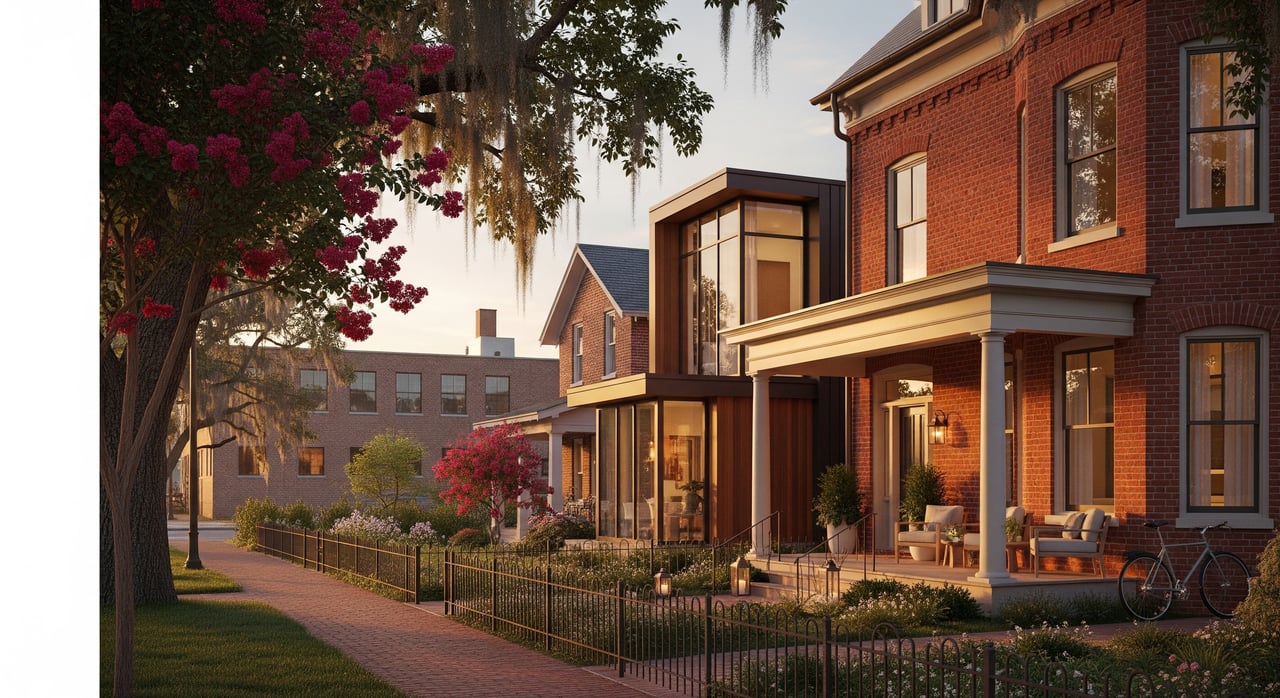
In‑town neighborhoods feature early 20th‑century bungalows, Queen Anne and Victorian homes, small apartment buildings, and converted industrial spaces that now house lofts and condos. In recent years, new infill townhomes and boutique condo projects have added options for low‑maintenance living close to the action. This variety lets you choose between historic charm and modern lines while staying near the same cultural core.
Design details
If you gravitate to craftsmanship, you’ll notice original woodwork, high ceilings, built‑ins, and generous porches in historic homes. Adaptive‑reuse lofts highlight exposed timber and brick with open plans that feel light and flexible. New infill often favors clean forms, natural materials, and large windows, blending contemporary comfort with respect for the neighborhood scale.
Streetscape patterns
Most in‑town areas follow a traditional street grid with mature trees and sidewalks in many, though not all, blocks. Short block lengths encourage walking and impromptu porch chats. Yards tend to be modest, so outdoor life often extends to the front porch, small back patios, and nearby parks rather than large private lawns.
Renovation and infill trends
Renovations typically preserve the historic shell while updating kitchens, baths, and systems for modern living. This approach lets you keep character while improving function and energy performance. New infill focuses on efficient use of land and thoughtful finishes, which can spark neighborhood conversations about scale and fit. If you value context, review local guidelines and observe how different blocks balance preservation and change.
Practical buyer questions
Schools and learning
Durham Public Schools operates local schools, including magnet programs and specialized offerings, and there are private and parochial options in the area. School boundaries and program availability change, so confirm current details directly with DPS. Proximity to Duke University, North Carolina Central University, and Durham Tech adds educational and cultural depth that many residents enjoy.
Safety and noise
Experiences vary by block. Downtown and nightlife corridors can have more late‑evening activity and occasional noise, while nearby residential streets are typically quieter. For current context, review local crime mapping and walk your target areas at different times of day. Streetlights, sidewalks, and traffic calming measures also differ by neighborhood and can shape your evening walk routine.
Cost and ownership
In‑town homes often carry a higher price per square foot than suburban options due to location and demand. Renovating and maintaining older homes is a planning factor, along with local property taxes, utility rates, and homeowners insurance. For condos and townhomes, confirm parking allocations, guest parking rules, and any HOA fees or special assessments. If you plan to rely less on a car, weigh the tradeoffs between off‑street parking and walkable access.
Zoning and future development
Durham’s Unified Development Ordinance and historic or conservation district rules can influence renovations and additions. New development proposals and rezonings sometimes shift a neighborhood’s feel over time. If you care about context, review recent City Council or planning board records for projects near your target blocks.
Pets and outdoor life
Many in‑town neighborhoods are dog‑friendly with nearby parks and trails. Leash laws and pet‑waste rules apply citywide. With greenways and the American Tobacco Trail close by, it’s easy to build a daily routine around quick walks and weekend outings.
Neighborhood snapshots
Downtown, Brightleaf, American Tobacco
Lifestyle: You have immediate access to theaters, restaurants, breweries, Bulls games, and cultural venues inside renovated industrial spaces. Expect frequent events, evening strolls, and an easy walk to shows and galleries.
Housing: Loft condos, newer mixed‑use buildings, and a mix of older single‑family homes on adjacent blocks create options for both low‑maintenance living and porch‑centric streets.
Trinity Park and Duke Park
Lifestyle: Mature trees and front porches define the streets. You’re a short walk to coffee, casual dining, and parks, with close proximity to Duke University and Sarah P. Duke Gardens. The pace feels neighborly and connected.
Housing: Early 20th‑century bungalows and larger historic homes anchor these blocks, with ongoing preservation and sensitive updates.
Old West Durham and Morehead Hill
Lifestyle: Strong neighborhood identity meets practical access to downtown and Duke by bike or car. Block parties and active civic associations are common, and the overall feel is residential and grounded.
Housing: Modest historic homes sit alongside larger renovated properties, reflecting steady investment and careful stewardship.
Hayti, Golden Belt, South Ellerbee
Lifestyle: Adaptive reuse is part of the story, with converted textile and tobacco buildings, cultural nodes, and creative enterprises. You’ll see an evolving mix of residential and mixed‑use spaces that draws people who appreciate character and momentum.
Housing: Historic homes, newer lofts, and townhomes provide range for different budgets and styles.
Ninth Street corridor
Lifestyle: Independent retailers and cafes line walkable blocks near university life. It’s a place where you can run a quick errand, meet friends, and still be home within minutes.
Housing: Smaller rental properties, townhomes, and houses converted to multi‑unit uses sit close to shops and transit.
Choose your in‑town fit
Use these simple steps to test how a block will fit your daily life:
- Map your essentials. List your coffee spots, markets, parks, and preferred evening venues. Walk or bike to each from a few homes you like and time the trips.
- Test your commute. Try your route during typical rush times and once on transit if that is part of your plan.
- Walk day and night. Visit in the morning, mid‑afternoon, and late evening to feel the street’s rhythm, noise levels, lighting, and foot traffic.
- Review context. Check local planning and historic district guidelines if you expect to renovate. Look at nearby development activity to understand what may change.
- Align budget and upkeep. Factor in potential renovation costs, utilities, taxes, and any HOA fees alongside your purchase price.
- Confirm parking and storage. If off‑street parking, bike storage, or EV charging matters, verify it early.
When you’re ready to compare specific blocks and properties, work with a local, design‑savvy guide who knows how the details play out day to day. If you want a calm, concierge experience with a neighborhood‑first approach, connect with Tim Hock for a personalized plan.
FAQs
What defines an in‑town Durham neighborhood?
- In‑town areas sit within or just beyond the historic downtown street grid, offering short distances to cultural venues, commercial corridors, parks, and major employers.
How walkable are Durham’s in‑town neighborhoods?
- Walkability is strongest near downtown, Brightleaf, American Tobacco, and the Ninth Street corridor, though it varies by block, time of day, and your comfort level.
What transit options serve Downtown Durham?
- GoDurham provides local bus service, GoTriangle connects the region, and Amtrak runs from the downtown station; there is no downtown light‑rail service as of the mid‑2020s.
What home styles are common in in‑town Durham?
- You’ll see early 20th‑century bungalows, Queen Anne and Victorian homes, small apartment buildings, and adaptive‑reuse lofts and condos, plus newer infill townhomes and boutique condos.
How do schools work for in‑town Durham addresses?
- Durham Public Schools manages assignments and magnet programs, and boundaries can change; confirm current information directly with DPS before making decisions.
What should I know about noise near downtown Durham?
- Nightlife corridors can have more evening activity and occasional noise, while nearby residential blocks are generally quieter; visit at different times to gauge the fit for your routine.
