Thinking about replacing windows, adding a porch, or building an addition in one of Durham’s historic districts? You are not alone. Many buyers and sellers love the character of places like Trinity Park and Cleveland-Holloway, but feel unsure about what is allowed and how long approvals take. This guide breaks down the rules in plain language so you can plan smart, avoid delays, and protect the value of your home. Let’s dive in.
Durham historic rules at a glance
Who enforces the rules
Durham’s local historic districts are governed by a city ordinance and administered by the Historic Preservation Office staff and the Historic Preservation Commission, known as the HPC. Exterior changes in these districts typically need a Certificate of Appropriateness, or COA. Local design guidelines and district-specific guidance set the standards the staff and HPC use to review your project.
Reviews follow the Secretary of the Interior’s Standards for Rehabilitation, adapted to local context. In practice, reviewers look at scale, massing, materials, roof forms, porches, window and door patterns, and how a building sits on its lot.
Why guidelines exist
Guidelines protect the character that makes these neighborhoods special. They aim to balance updates for modern living with the look and feel of the streetscape. When you follow them, you help maintain curb appeal, neighborhood consistency, and long-term value.
What needs approval
Changes that trigger a COA
Most exterior work visible from the public right of way will need review. Common items include:
- New construction within the district
- Additions that change massing or rooflines
- Demolition or moving a structure
- Primary facades and visible elevations, including porches, windows, doors, siding, and foundations
- Roof materials, dormers, and chimneys
- Fences and walls visible from the street
- Significant changes to visible outbuildings
- Site work that affects historic landscape features, driveways, or mature front-yard trees in some districts
Work often exempt or administrative
Some projects are exempt or eligible for administrative staff approval when they are minor and like-for-like. Examples include:
- Routine maintenance and in-kind repairs that do not change appearance
- Interior work that does not affect exterior features
- Certain rear-yard changes that are not visible from the street, depending on the district
- Minor items such as gutters, downspouts, or storm windows, depending on materials and visibility
Visibility from the public right of way and impact on character-defining features are key thresholds. District guidelines and staff interpretations define the line between administrative and commission review.
Materials and replacement basics
Guidelines usually prefer repair over replacement for original materials, especially windows, porches, and wood siding. Replacement on primary facades should match the original in profile, texture, and scale. Vinyl on primary elevations is often discouraged. New construction and additions should read as compatible rather than identical, with massing, setback, roof pitch, and opening patterns that fit the block.
The COA process, step by step
Start with staff consultation
A brief pre-application talk with Historic Preservation Office staff helps you confirm what level of review you need, what drawings and photos to prepare, and any red flags. Early guidance often saves weeks later.
Submit your application
You will submit a COA application with drawings, photographs, material specs, and a clear scope. Staff checks completeness. If the work is minor and meets the guidelines, staff may issue an administrative COA. If it is a major change, or if policy questions arise, your case goes to an HPC hearing.
Administrative vs commission review
- Administrative review: Routine, in-kind repairs and minor changes that meet clear standards. This path can be faster.
- HPC hearing: Required for demolitions, new construction, substantial additions, relocations, and material changes to primary elevations. The commission hears the case, takes public comment, and votes. Approvals may include conditions you must follow.
Timelines to plan for
- Administrative COA: Often resolved in a few weeks, commonly 2 to 6 weeks depending on completeness and workload.
- HPC review: Plan for roughly 4 to 12 weeks or more. Application deadlines, meeting schedules, public notice, and revisions can extend timing.
You usually cannot receive a building permit until the COA is approved. Coordinate both tracks so your project stays on schedule.
Public notice and appeals
Projects heard by the HPC receive public notice, and neighbors may comment at the hearing. Decisions include an appeal path defined by local ordinance. If you have questions about appeals, ask staff to outline the current steps.
Trinity Park vs Cleveland-Holloway priorities
Trinity Park priorities
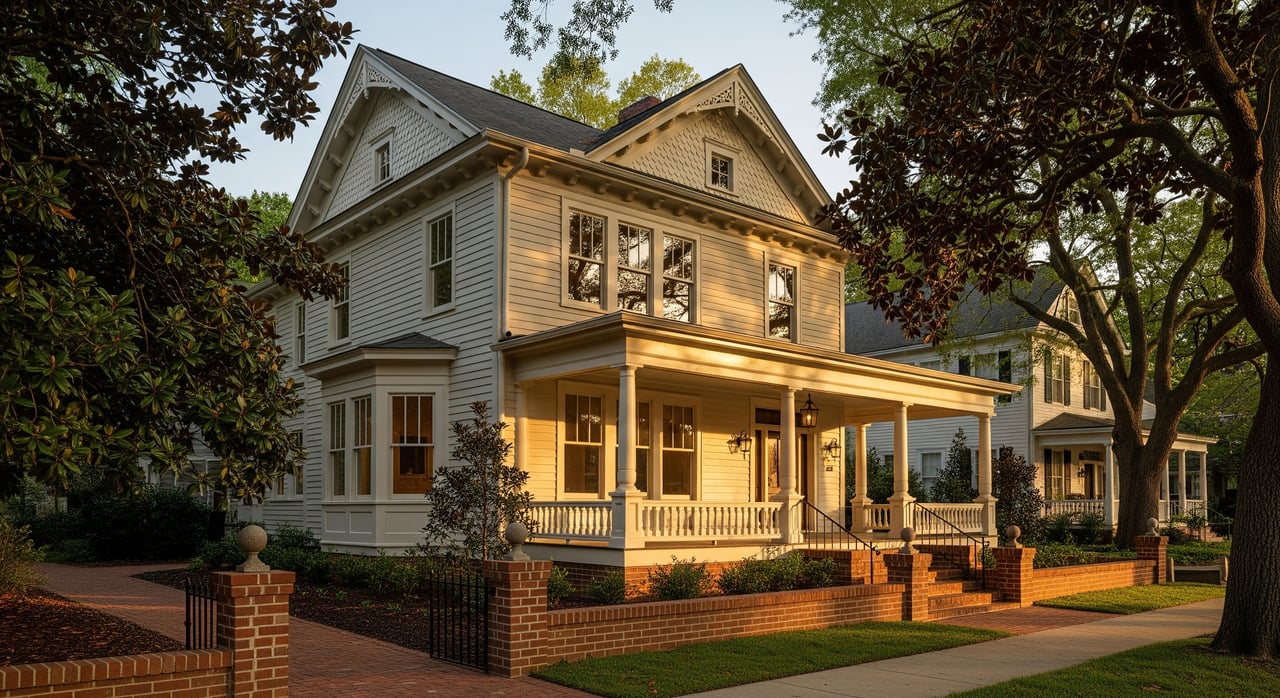
Trinity Park is known for late-19th and early-20th century homes with generous porches, complex rooflines, and mature tree canopy. Reviews tend to focus on:
- Front porches, including supports and balusters
- Porch locations and entry details
- Window size and sash patterns
- Siding materials and shingle rhythms
- Roof forms, dormers, and chimneys
- Setbacks and spacing along the street
New work in Trinity Park should be compatible in scale and setback. Additions typically should be visually subordinate to the historic structure and maintain the porch-forward streetscape.
Cleveland-Holloway priorities
Cleveland-Holloway features modest early-20th century houses, bungalow forms, smaller lots, and strong porch rhythms. Reviews watch for:
- Maintaining front-porch presence and details
- Preserving small-scale massing and roof forms
- Respecting lot coverage, setbacks, and spacing between houses
- Repairing historic siding and trim rather than wholesale replacement
Because of smaller lots, infill and additions receive close scrutiny for scale and impact on neighbors. Compatibility matters.
Flexibility and design approach
Some districts set tighter material standards than others, and some allow more contemporary expression if core patterns of massing, setback, and openings are respected. Always confirm the exact district guidelines before committing to a design direction.
Planning your project smartly
If you are selling
If you want exterior work done before listing, start early. An administrative COA may fit like-for-like porch repairs or roof work. Larger projects that need an HPC hearing can add months. If timelines are tight, consider focusing on interior improvements and exterior maintenance that do not require a COA, but confirm exemptions with staff.
Sellers can also apply for a COA in advance for planned improvements. Having an approval in hand can reassure buyers, though it adds time and cost upfront.
If you are buying
If you plan renovations, include a COA contingency in your contract or verify feasibility before closing. A quick consult with Historic Preservation Office staff, plus an architect or contractor who knows local historic work, can help you gauge cost, timing, and likelihood of approval.
When speed matters, target interior updates first and prioritize rear-yard or not-visible work that may be exempt or administrative, depending on your district.
Costs and incentives
Plan for direct costs like application fees and design documentation, plus potential premiums for historically appropriate materials. Indirect costs include schedule extensions and possible design conditions from the HPC. Owners of income-producing historic properties may be eligible for state or federal rehabilitation tax credits if work follows the Secretary’s Standards. Check current city and state programs for availability and requirements.
Due diligence checklist
Use this checklist to avoid surprises:
- Confirm the property is in a local historic district, not just listed on the National Register.
- Obtain the district’s design guidelines and any prior COAs attached to the property.
- Document existing conditions with photos and a list of character-defining features.
- Meet with Historic Preservation Office staff for pre-application guidance.
- If renovations are planned, get a feasibility review from a professional familiar with Durham historic districts.
- Include a COA or approvals contingency in your purchase contract if exterior work is key to your plan.
Strategies that speed approvals
- Focus on repair over replacement when feasible.
- Match original profiles, textures, and dimensions for windows, siding, and trim. Bring samples and manufacturer specs.
- Keep additions visually subordinate and set back from the primary facade.
- Submit clear, scaled drawings, photos, and a precise materials list. Incomplete submissions cause many delays.
- Stay responsive to staff feedback and be ready to adjust details that do not align with guidelines.
Go-to resources in Durham
For the most current details, contact these offices and documents:
- City of Durham Historic Preservation Office and Historic Preservation Commission for ordinance language, COA applications, meeting schedules, and fees
- Trinity Park Historic District design guidelines
- Cleveland-Holloway Historic District design guidelines
- Secretary of the Interior’s Standards for Rehabilitation
- North Carolina State Historic Preservation Office for state guidance and information on tax credits for income-producing properties
- City of Durham Building and Permitting Division for permits and inspections after COA approval
Ready to move forward?
You can update a historic home and respect the district at the same time. The key is planning, clear documentation, and early conversations with the right people. If you want a local partner who understands both stewardship and market strategy, we are here to help. Connect with Tim Hock to talk through your goals and timeline.
FAQs
What is a Certificate of Appropriateness in Durham?
- A Certificate of Appropriateness, or COA, is the city’s approval required for most exterior changes in local historic districts, ensuring work aligns with district guidelines.
Which exterior projects usually need a COA?
- New construction, additions, demolition, and changes to visible facades such as porches, windows, doors, siding, and roofs typically require review.
How long does the COA process take in Durham?
- Administrative approvals often take 2 to 6 weeks; projects requiring an HPC hearing can take 4 to 12 weeks or more, depending on schedules and revisions.
Do interior renovations need historic review?
- Interior work is not regulated unless it affects exterior features, such as changing window openings or altering porch structure.
What is the difference between administrative and HPC review?
- Staff can approve routine, like-for-like work that meets clear standards, while the HPC hears major projects like additions, new construction, and demolitions.
What should buyers include in a contract if they plan renovations?
- Consider a COA or approvals contingency and consult with city staff and a local professional to confirm feasibility before closing.
Are vinyl windows allowed on a primary facade?
- Many district guidelines discourage vinyl on primary elevations; replacement should closely match original profiles, materials, and dimensions.
Can I get a building permit before my COA is approved?
- Typically no. In most cases, the city requires an approved COA before issuing building permits for exterior work in historic districts.
